ENTERTAINMENT MEDIA FOR SOCIAL IMPACT
Ideas can change
behavior.
Stories can change
societies.
Victor Hugo Orozco-Olvera is an economist and researcher exploring how behavioral science, entertainment, technology, and artificial intelligence can drive measurable social change at scale.
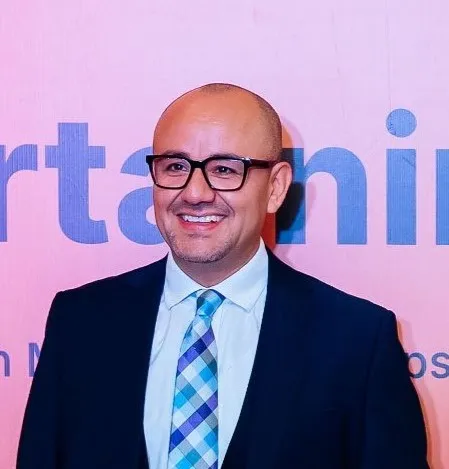
Victor Hugo Orozco-Olvera
Economist · Researcher · Global Program Leader
ENTERTAINMENT MEDIA FOR SOCIAL IMPACT
Ideas can change
behavior.
Stories can change
societies.
Victor Hugo Orozco-Olvera is an economist and researcher exploring how behavioral science, entertainment, technology, and artificial intelligence can drive measurable social change at scale.
Victor Hugo Orozco-Olvera
Economist · Researcher ·
Global Program Leader
Ideas moving across institutions, industries, and cultures.
Ideas moving across institutions, industries, and cultures.
Ideas moving across institutions, industries, and cultures.
Ideas moving across institutions, industries, and cultures.
THE QUESTIONS BEHIND THE WORK
01
Can a television drama reduce HIV risk?
02
Can social media change gender norms?
03
Can AI help us understand the stories shaping society?
04
Can entertainment improve education?
05
Can storytelling change behavior at scale?
These aren't hypothetical questions.
They're research questions.
Five threads, one question.
Each area is a different way into the same problem: how the stories people watch, share, and believe end up shaping what they do.
01
Entertainment & Media
How film, television, storytelling, and social platforms influence behavior and social norms.

02
Behavioral Economics
The psychological and social forces behind human decisions - and the messages that move them.

03
Artificial Intelligence
Using AI and machine learning to understand media, behavior, social narratives, and online speech.

04
Global Development
Testing interventions across education, health, gender equality, economic opportunity, and wellbeing.

05
Social Norms & Behavior Change
How beliefs spread, and how change occurs at population scale rather than one person at a time.

Five threads, one question.
Each area is a different way into the same problem: how the stories people watch, share, and believe end up shaping what they do.
01
Entertainment & Media
How film, television, storytelling, and social platforms influence behavior and social norms.
02
Behavioral Economics
The psychological and social forces behind human decisions - and the messages that move them.
03
Artificial Intelligence
Using AI and machine learning to understand media, behavior, social narratives, and online speech.
04
Global Development
Testing interventions across education, health, gender equality, economic opportunity, and wellbeing.
05
Social Norms & Behavior Change
How beliefs spread, and how change occurs at population scale rather than one person at a time.
EVIDENCE
Research that reached real audiences.
Randomized evaluations of entertainment, media, and messaging — conducted with governments, studios, platforms, and universities.
01 · Nigeria
MTV Shuga × HIV Prevention
Can a television drama reduce HIV risk?
A randomized evaluation of MTV Shuga, an edutainment drama watched across Africa, tested whether a television series could change young people's sexual health behavior — not just their attitudes.
2×
Viewers of MTV Shuga were twice as likely to get tested for HIV.
WHAT HAPPENED
Twice as likely to get tested for HIV — a result covered by The Hollywood Reporter, NPR, and Bloomberg.
WHY IT MATTERS
If a drama can move behavior at the scale of a broadcast audience, entertainment becomes one of the most cost-effective public-health tools available.
World Bank study with Abhijit Banerjee (MIT) and Eliana La Ferrara (Bocconi)
02 · INDIA
Facebook Ads × Malaria Prevention
Can social media prevent disease?
Two field experiments randomly assigned a nationwide malaria-prevention advertising campaign across Indian districts, measuring effects on 8,257 surveyed individuals and administrative health records.
-44%
Self-reported malaria incidence fell by 44 percent among users in lower-risk, solid dwellings.
WHAT HAPPENED
An 11 percent rise in bed-net use and 13 percent rise in timely treatment-seeking — with facility data showing a 30 percent drop in urban monthly incidence.
WHY IT MATTERS
The same campaign did nothing where ads didn't reach — proving that targeting, not just content, decides whether social media can deliver public health.
World Bank Policy Research Working Paper 10967 (2024)
03 · NORTHERN NIGERIA
My Better World × Education
Can entertainment keep girls in school?
Community screenings of the African series My Better World — later honored with an International Emmy for partners Impact(Ed) International and Fundi Films — were evaluated for their effect on schooling, marriage, and parenthood.
WHAT HAPPENED
Screenings significantly increased school attendance and reduced teenage marriage and teenage parenthood — at both the 1-year and 3-year follow-ups.
WHY IT MATTERS
Effects that persist three years later suggest stories don't just nudge a moment — they can redirect a life trajectory.
World Bank research in northern Nigeria
04 · 23 countries
Behavioral Messaging × COVID-19
Which words move vaccine intentions?
A global research program of 28 online experiments recruited 123,270 people through social media across 23 mostly low- and middle-income countries to test behaviorally informed vaccination messages.
1.28×
Behaviorally informed messages increased the odds of vaccination intention overall — up to 1.93× in individual studies.
WHAT HAPPENED
Framings built on experts and religious leaders raised odds of vaccination intention by up to 1.45 times.
WHY IT MATTERS
A rapid, evidence-ranked playbook for health communication — built for the next crisis before it arrives.
World Bank Policy Research Working Paper 10981 (2024)
NARRATING BEHAVIOR CHANGE
Entertainment is more than entertainment.
Stories shape what people believe is possible, acceptable, normal, and desirable.
Victor founded and leads the World Bank Group's program on entertainment media for social impact, within the Development Impact Group (DECDI).
He runs it in close collaboration with researchers and practitioners across governments, the World Bank, the International Finance Corporation, development partners, academia, and leading entertainment and technology organizations including: MTV, Discovery, Meta, Girl Effect, Cinépolis, Impact Lounge, and the ONE Campaign.
Where the work happens
Evidence built across four regions.
- Latin America
- Sub-Saharan Africa
- South Asia
- Middle East & North Africa
Publications
Andreottola, Basenya, Orozco-Olvera, Reichert & Spinola
Authorizing trained community health workers to deliver injectable contraception raised administered doses by roughly 70 percent.
World Bank Policy Research Working Paper 11074
Donati, Munoz-Boudet, Orozco-Olvera & Rao
A nationwide malaria campaign on social media increased bed-net use and treatment-seeking - and showed why targeting matters.
World Bank Policy Research Working Paper 10967
Pinzon Hernandez, Lim, Dugas, Moscoe, Afif, Vakis, Orozco-Olvera et al.
Across 28 experiments in 23 countries with 123,270 people, behaviorally framed messages significantly raised vaccination intentions.
World Bank Policy Research Working Paper 10981
Tonneau, Liu, Malhotra, Hale, Fraiberger, Orozco-Olvera & Röttger
The first globally representative hate-speech dataset - revealing that real-world detection performs far worse than academic benchmarks suggest.
Computation and Language Working Paper
Tonneau, Quinta de Castro, Lasri, Farouq, Subramanian, Orozco-Olvera & Fraiberger
The first representative Nigerian hate-speech dataset shows models trained on US data fail to generalize to the Majority World.
Proceedings of the 62nd ACL
Coville, Orozco-Olvera & Reichert
A randomized national radio-and-print campaign moved adoption of solar technology - and radio won on cost per additional sale.
Oxford Open Economics, Vol. 3
Orozco-Olvera & Malhotra
A stocktake of what rigorous research says about the power of mass media to change health behavior.
Handbook chapter
Orozco-Olvera, Shen & Cluver
Three decades of experiments show entertainment-education measurably shifts youth sexual behavior - small effects, massive scale.
PLoS ONE 14(2)
Alix-Garcia, Sims, Orozco-Olvera, Costica, Fernández Medina, Romo Monroy & Pagiola
Mexico's payments for ecosystem services cut tree-cover loss by up to 29 percent in high-risk areas while strengthening land management.
World Bank Policy Research Working Paper 8707
Cho, Kalomba, Mobarak, Orozco-Olvera & Wolfson
Training built skills for Malawian youth, but women participated under heavier constraints - and paid more to take part.
Yale University Working Paper
Where the evidence enters
the conversation.
COVERAGE & COMMENTARY
ON STAGE
Impact Lounge panel - “How Storytelling Drives Measurable Social Impact.”
Panelist on entertainment and social change.
WBG Entertaining Change sessions - from UNGA to Abuja, Lagos, and Los Angeles, with actor and director David Oyelowo.
Co-organized forum with the Hollywood Foreign Press Association; Sharon Stone on entertainment media for global impact.
Ongoing dialogue between evidence, cinema, and policy.
ABOUT
Victor Hugo
Orozco-Olvera
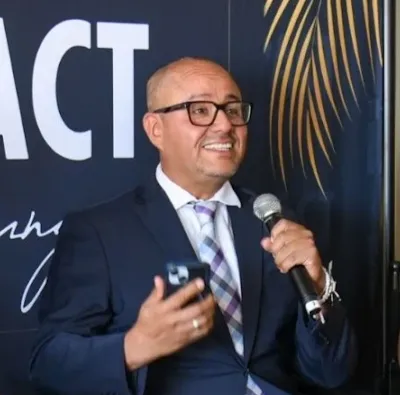
Senior Economist in the World Bank Group's Development Impact Group (DECDI), where he founded and leads the program on entertainment media for social impact.
His research uses randomized evaluations to test whether storytelling, media, and behaviorally informed messaging can change what people do - in health, education, gender, energy, and the environment - across Latin America, Sub-Saharan Africa, and South Asia.
01
Princeton
Master's in Public Affairs and Economics - the tools of policy, learned at scale.
02
Oxford
PhD in Social Intervention - a dissertation on what actually changes behavior.
03
World Bank Group
Senior Economist in the Development Impact Group (DECDI) - evidence as an instrument of development.
04
Narrating Behavior Change
Founded and leads the World Bank Group's program on entertainment media for social impact.
05
Global Research · Partnerships
A portfolio spanning Latin America, Sub-Saharan Africa, and South Asia - with governments, studios, platforms, and universities.
ABOUT
Victor Hugo
Orozco-Olvera
Senior Economist in the World Bank Group's Development Impact Group (DECDI), where he founded and leads the program on entertainment media for social impact.
His research uses randomized evaluations to test whether storytelling, media, and behaviorally informed messaging can change what people do - in health, education, gender, energy, and the environment - across Latin America, Sub-Saharan Africa, and South Asia.
01
Princeton
Master's in Public Affairs and Economics - the tools of policy, learned at scale.
02
Oxford
PhD in Social Intervention - a dissertation on what actually changes behavior.
03
World Bank Group
Senior Economist in the Development Impact Group (DECDI) - evidence as an instrument of development.
04
Narrating Behavior Change
Founded and leads the World Bank Group's program on entertainment media for social impact.
05
Global Research · Partnerships
A portfolio spanning Latin America, Sub-Saharan Africa, and South Asia - with governments, studios, platforms, and universities.